
Electric aviation is no longer a distant vision, it is quickly becoming reality. Around the world, countless initiatives are working toward emission-free flights. Yet BETA Technologies appears to be become the first one operational, with its ALIA aircraft already flying and nearing real operational use. It increasingly looks like one of the first electric aircraft is ready to enter service.
From May 27–29, the company will bring the ALIA to the Netherlands.
The ALIA by BETA Technologies is not a futuristic concept, it’s an aircraft that is already moving toward real-world operations.
The aircraft comes in two configurations:
- ALIA CX300 (eCTOL) → conventional takeoff and landing (runway-based)
- ALIA A250 (eVTOL) → vertical takeoff and landing


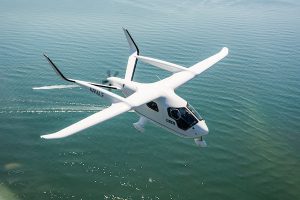
What kind of aircraft is it
The ALIA is designed as a practical, regional utility aircraft, not just for passengers, but also for cargo, medical logistics, and short-haul mobility.
Key specifications:
- Capacity: 1 pilot + 4–5 passengers
- Range: approx. 450-500km
- Payload: around 550–570 kg
- Charging time: roughly 1 hour
- Propulsion: fully electric
- Configuration:
- 1 rear pusher propeller (cruise)
- Multiple lift rotors (VTOL version only)
A major design choice: BETA avoids complex tilt-rotor systems and instead uses a simpler, more robust architecture which directly benefits reliability and operating costs.
Where it really stands out
Unlike many eVTOL projects, ALIA is built with operational reality in mind:
- Lower operating costs (target significantly below turboprops/helicopters)
- Much lower noise footprint
- Dedicated charging infrastructure (BETA is rolling out its own network)
- Flexible deployment:
- VTOL → access to constrained locations
- CTOL → immediate use at existing airports
This makes it relevant for:
- regional business connectivity
- medical and urgent logistics
- cargo / express operations
- niche corporate shuttle concepts
Certification & entry into service
What has already been achieved:
- The CX300 has completed extensive real-world flight testing
- First piloted electric flights with passengers have already taken place in the U.S.
- Aircraft are flying under experimental / pre-certification approvals
- Demonstration campaigns are ongoing in both the U.S. and Europe
Expected timeline:
- ALIA CX300 (runway version)
→ Initial commercial operations: 2026 (limited scale) - ALIA A250 (eVTOL version)
→ Certification and entry into service: ~2027–2028
How to position it (realistically)
From a business aviation perspective:
- It is highly relevant as:
- a regional feeder aircraft
- a sustainable shuttle solution
- a first/last mile connector to business aviation hubs
Think short sectors such as:
- Amsterdam – London
- Amsterdam – Paris
- Benelux – Germany
…with a strong sustainability angle.
Bottom line
The ALIA is one of the few electric aircraft programs that:
- is already flying extensively
- has a clear commercial use case
- and does not depend on futuristic infrastructure
The CX300 is close to real operational deployment
The eVTOL variant is still a few years out
BETA Visit to the Netherlands | 27–29 May 2026
The BETA Technologies team will visit the Netherlands from 27 to 29 May 2026, bringing one of the most advanced electric aircraft programs in the world to Dutch soil. This visit offers a unique opportunity for industry stakeholders, authorities, and operators to experience firsthand how electric aviation is moving from concept to reality.
What to expect
Wednesday, 27 May (tentative)
Arrival of the BETA team in Amsterdam.
Thursday, 28 May (tentative)
A full day dedicated to showcasing electric aviation capabilities:
- Aircraft presentation to customers, authorities, and stakeholders
- Demonstration flight during the day
- Reception at the JetSupport hangar, hosted by e-Smart Avia
Friday, 29 May (tentative)
A multi-leg demonstration across key Dutch airports:
- Departure from Amsterdam Airport Schiphol
- Arrival at Den Helder Airport
- Departure from Den Helder
- Arrival at Lelystad Airport
- Departure from Lelystad
- Arrival back at Schiphol
Why this matters
The visit highlights the accelerating transition towards sustainable aviation. BETA’s aircraft, designed for both cargo and passenger operations, combine zero operational emissions with significantly reduced noise levels, making them particularly relevant for regional connectivity in densely populated areas like the Netherlands.
For the Dutch aviation ecosystem, this is more than a demonstration. It is a practical look at how electric aircraft can integrate into existing infrastructure, support regional mobility, and contribute to long-term sustainability goals.
This visit represents a significant step in bringing next-generation aviation solutions into practical use within the Netherlands. Stakeholders are encouraged to engage, observe, and explore how electric aviation can complement the existing aviation landscape.